Zum Inhalt springen

Battery Analysis

Electro-Chemical Reaction Visualizing Confocal System

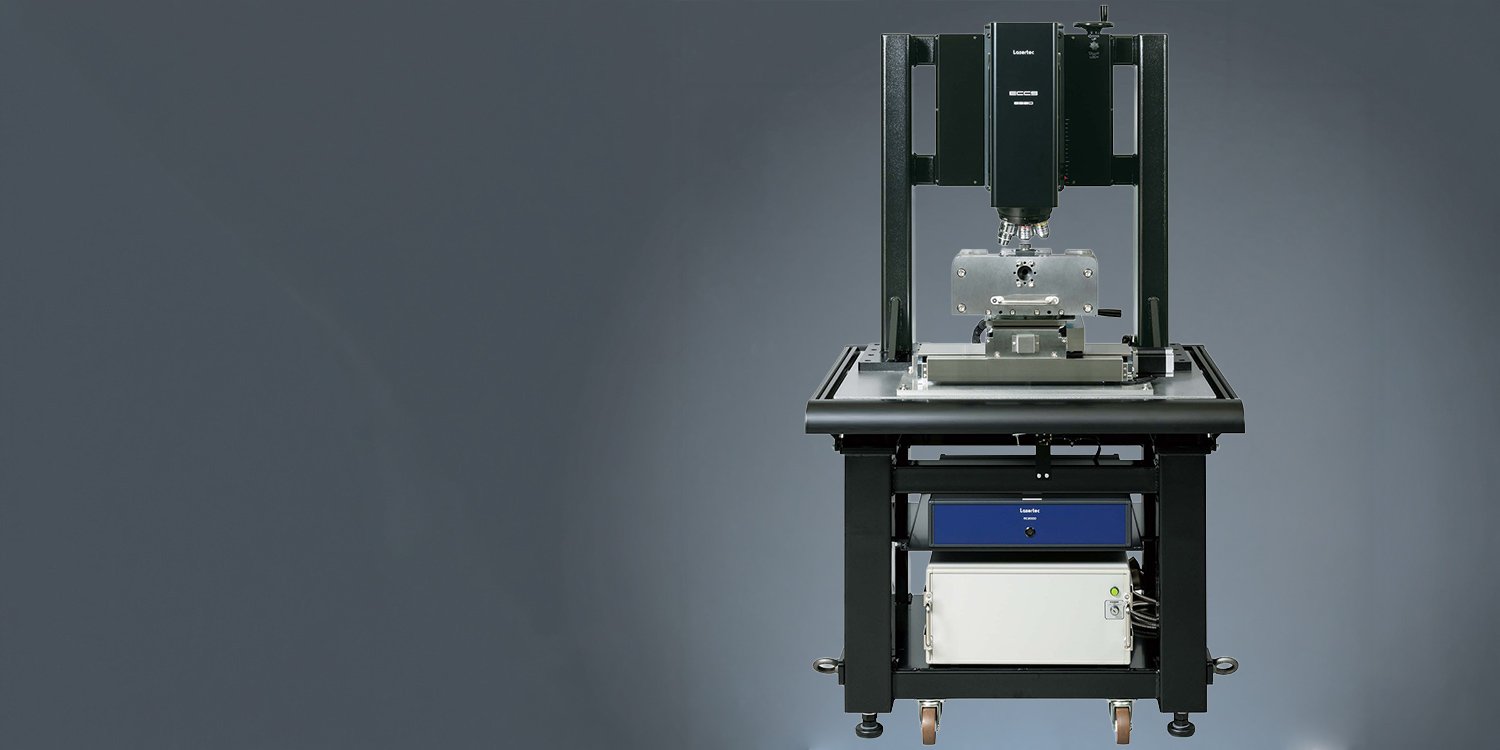
ECCS B520

Battery developers increasingly need to see what is actually happening inside a cell while it charges and discharges, not just measure the result afterwards. The ECCS B520 is a confocal microscope system built specifically for this kind of operando observation, letting engineers watch electrode reactions, expansion, and dendrite growth unfold in real colour and in real time.

Lasertec & DJK Europe

Lasertec Corporation develops high-precision confocal microscopy and inspection systems used across semiconductor, electronics and advanced-materials research. With the ECCS B520, Lasertec brings its true-colour confocal optics to the battery field, enabling direct observation of electrochemical reactions inside a working cell.

DJK Europe supports customers in adopting the ECCS B520 for battery R&D, process development and material evaluation — from system selection and integration to application support. 

Built for the Next Generation of Batteries

As battery chemistries get more demanding, so does the testing they require: all-solid-state cells need uniform, MPa-level pressure during observation, and silicon-based anode materials call for analysis at the level of individual particles. The third-generation ECCS B520 was developed around exactly these requirements, pairing new optical hardware with a purpose-built observation cell.

Receive a free product brochure by email now!

By entering and submitting your email address, you agree that we may store and use it for the purpose of contacting you and/or sending you relevant information.

See Battery Reactions as They Happen

The ECCS B520 uses Lasertec's proprietary true-colour confocal optics to capture electrochemical reactions inside a working cell without the distortion normally introduced by glass and electrolyte. The result is high-resolution, high-contrast footage that turns subtle colour and brightness changes in the active material into quantifiable reaction data — across full cells, half cells, pouch cells, all-solid-state cells, and sodium-ion cells.

      Key Features

      Long-Life LED Illumination

      • A long-life LED light source keeps brightness stable and consistent from the first measurement to the last, so results stay comparable across long cycling tests.

      Independently Pressure-Controlled Cell

      • The newly designed observation cell has its own pressure-control structure, separate from the optics, keeping mechanical pressure on the sample steady throughout a charge–discharge cycle.

      CE-Marked for the European Market

      • A CE-compliant version of the system is available, making the ECCS B520 straightforward to install and operate at European research and production sites.

      Next-Generation Observation Cells

      Supported samples

      Pouch cell batteries

      Sample size

      25 mm

      Test pressure

      up to 20 MPa

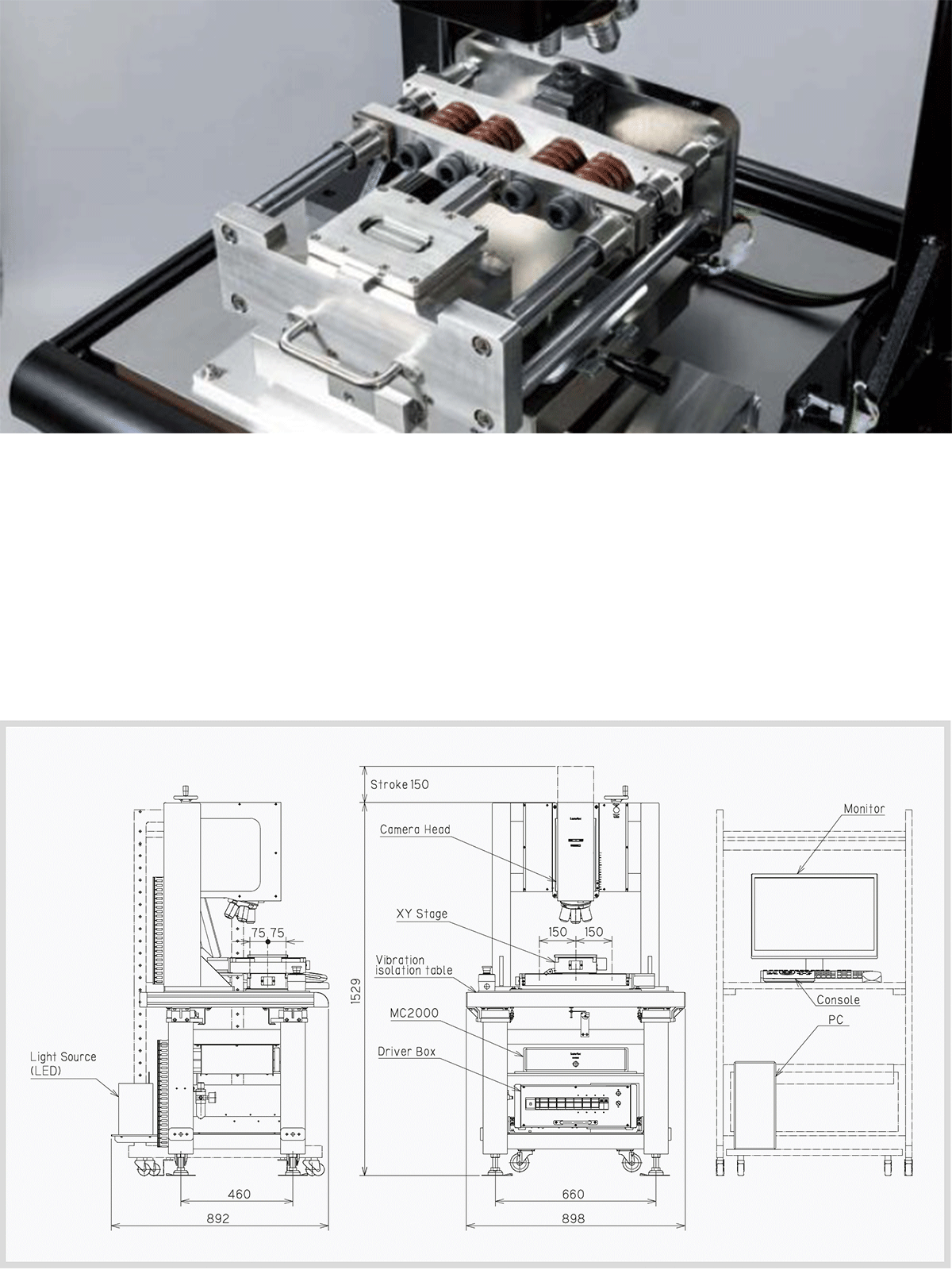
      A load cell built into the compression fixture tracks pressure continuously through the full charge–discharge cycle, giving real-time confirmation that the sample is being tested under the intended mechanical conditions.

      Supported samples

      Single-side coated electrodes

      Sample size

      5 mm

      Test pressure

      up to 50 MPa

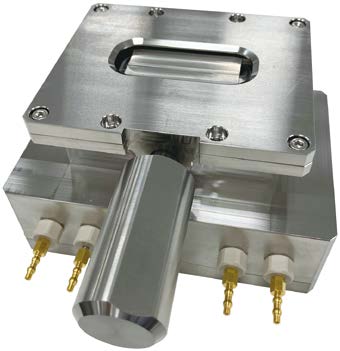
      Co-developed with JEOL Ltd. and Nogami Giken Co., Ltd., the CP Cell is built around cross-section polished (CP-milled) samples, allowing individual particles to be observed with high clarity.


      Analytical Software — RISM

      Automatically extracts and analyses individual active-material particles in all-solid-state battery samples, rather than treating the electrode as a single uniform layer.


      Co-developed with Toyo Corporation, this mode runs operando observation and electrochemical impedance measurements at the same time, syncing optical and electrical data from a single test.

      Supported Batteries & Applications

      Supports full cell, half cell, pouch cell, all-solid-state, and sodium-ion formats. Typical applications include:

      • • Reaction and behaviour analysis of anode / cathode materials
      • • Expansion and contraction measurement
      • • Dendrite formation studies
      • • Degradation tracking across charge–discharge cycles
      • • C-rate and temperature-dependent reaction testing
      • • Metallic foreign-particle monitoring
      • • Gas-generation visualisation
      • • New-material evaluation

      Observation Example

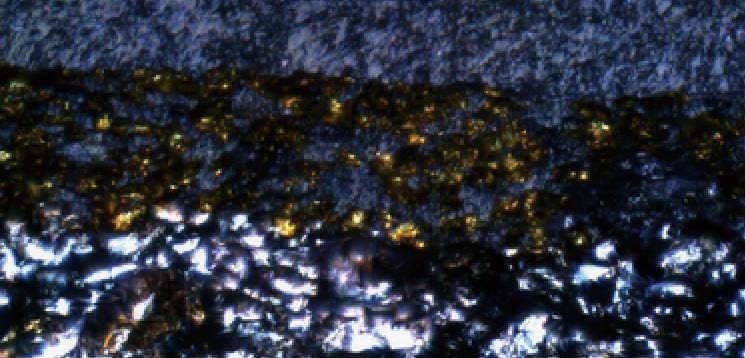
      A cross-section of a graphite/silicon-oxide composite electrode, observed before and after charging — the colour change in the silicon-oxide particles is what the system's reaction-distribution analysis quantifies over time.


      Contact

      DJK Europe GmbH
      Mergenthalerallee 79-81
      65760 Eschborn, Germany
      Phone: +49 6196 77614-15